
Seven Scanguard Alternatives, Matched to the Reason You Are Leaving
Bitdefender is the strongest paid default, Microsoft Defender is the cleanest free Windows exit, and Norton is the most complete family bundle. The right replacement changes if the problem is renewal, platform support, false alarms, Mac coverage or the shared company behind Scanguard and TotalAV.

Quick answer: choose Bitdefender Total Security for the best overall protection-first replacement, Microsoft Defender to remove subscription cost on Windows, Norton 360 Deluxe to consolidate family extras, ESET for granular controls and light current impact, Malwarebytes Standard for a simple remediation-led experience, Intego ONE for a Mac-first household, or TotalAV only when you accept that it shares Scanguard's legal owner.
Which Scanguard replacement should you choose?
Start with the reason you opened this page. If Scanguard's jump from a discounted first year to the regular renewal is the problem, Microsoft Defender removes the separate Windows antivirus bill while Bitdefender and ESET give you stronger paid alternatives with clearer current evidence. If separately managed VPN, password or ad-blocking subscriptions are the problem, Norton's one-bundle structure may be worth more than its higher renewal.
A platform problem creates a different shortlist. Bitdefender, Norton and ESET are the cleanest mixed-device routes; Intego is the Mac-first specialist; Microsoft Defender is the simplest Windows-only answer. Scanguard's current iPhone listing can be verified, but our August audit found an Android route involving older vendor-hosted distribution and stale store routing, so an Android-heavy household has a legitimate reason to prefer a product with a current verified store and direct mobile test history.
Corporate preference is the fastest filter of all. Scanguard and TotalAV both contract through Total Security Limited, so TotalAV is not an independent-company exit even though its plans, applications and lab submissions must still be evaluated separately. Choose one of the other six if shared ownership or the associated promotional billing model is the issue.

What are you actually replacing?
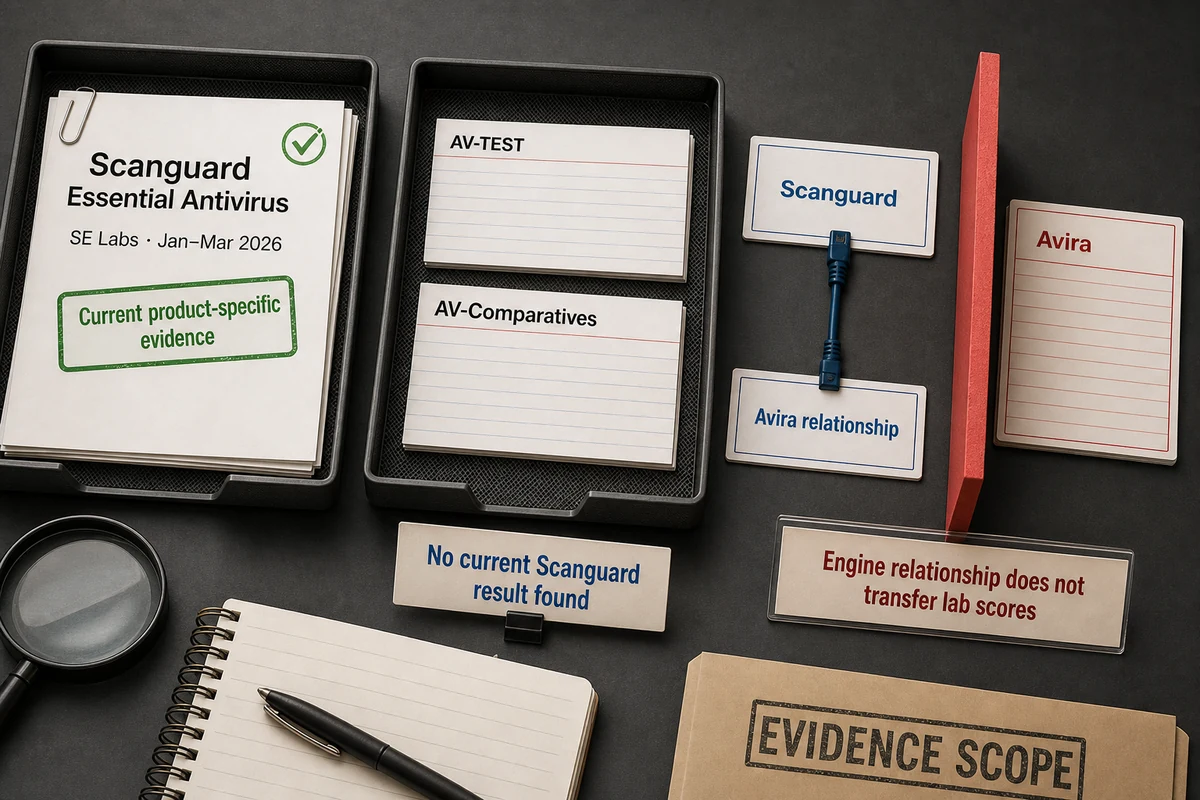
Scanguard is not an imaginary or untested application. The product earned an AAA award in the SE Labs January–March 2026 factsheet, with 95% Protection Accuracy, 100% Legitimate Accuracy and 98% Total Accuracy. It protected against all twenty-five targeted attacks in that set and generated no false positives in the legitimate set, so fear-based “remove this fake antivirus immediately” advice does not match the available product-specific evidence.
The commercial baseline is less forgiving. The European live Scanguard deal checked on August 5 showed €29 for the first year, €99 annual renewal and three licenses. The current pricing matrix also separates VPN, unlimited-device coverage, password management and other services, while the billing guidance explains that services can be managed as individual subscriptions.
That means a useful replacement must beat Scanguard on the dimension that matters to you, not merely exist in more “best antivirus” lists. Read our full Scanguard review if the choice is still open, and use the Scanguard pricing and renewal analysis to inventory the actual product and add-ons before comparing a competitor's bundle.
Seven Scanguard alternatives at a glance
This ranking is editorial, but the facts below remain attached to the exact product and test that produced them. The Windows protection figures use the same AV-Comparatives February–May 2026 real-world set where possible; Intego uses separate Mac evidence and Scanguard uses SE Labs, so those percentages are not cross-laboratory scores. Prices are dated direct-US or direct-European snapshots, not promises for every currency or checkout.
| Rank and product | Best reason to switch | Current evidence snapshot | Key limitation |
|---|---|---|---|
| 1. Bitdefender Total Security | Best paid default | 99.5%; 2/400 compromised; 5 false alarms | Included VPN limited to 200 MB/day/device |
| 2. Microsoft Defender | No-cost Windows exit | 99.0%; 4/400; 0 false alarms | Not a bundled cross-platform consumer suite |
| 3. Norton 360 Deluxe | Five-device family bundle | 99.3%; 3/400; 5 false alarms | $124.99 regular renewal; features vary by OS |
| 4. ESET HOME Security | Controls and low impact | 98.5%; 6/400; 2 false alarms | Protection trailed top choices in this cycle |
| 5. Malwarebytes Standard | Simple remediation-led security | 98.8%; 5/400; 39 false alarms | High current false-alarm and impact results |
| 6. Intego ONE | Mac-first household | 18/18 AV-TEST; 96.7% Mac malware in separate AV-C test | No tested malicious-site protection; not mixed-platform |
| 7. TotalAV | Closest sibling with clearer plan ladder | 99.0%; 4/400; 5 false alarms | Same Total Security Limited family |
1. Bitdefender Total Security: best overall paid replacement
Bitdefender is our first recommendation when the reader wants to leave Scanguard without reducing protection ambition or platform reach. The current individual Total Security tier covers five Windows, macOS, Android or iOS devices under one account, while the family route scales much further. The official Total Security page also makes the 200 MB-per-day-per-device Standard VPN allowance explicit, which prevents an included feature from being mistaken for an unlimited everyday VPN.
The protection case is strong and direct. Bitdefender earned 18/18 in the May–June 2026 AV-TEST Windows cycle. In AV-Comparatives' February–May real-world test, it protected against 398 of 400 cases, allowed two compromises and produced five false alarms, earning Advanced+.
The tradeoff is complexity. Bitdefender's plan family, device allocation, optional unlimited VPN and renewal can produce a bigger account than a three-device Scanguard buyer actually needs, and the April impact score of 9.6 was not the lightest in the field. Use our Bitdefender review, price the exact device count and test the daily PC before concluding that the protection leader is also the most comfortable product.
2. Microsoft Defender: best zero-cost Windows exit
Microsoft Defender is the cleanest answer when the problem is the antivirus bill itself. Defender Antivirus is built into supported Windows 10 and 11 installations, while Windows Security exposes firewall status, reputation controls, offline scanning, ransomware settings and device-security health. There is no separate Scanguard-style first-year promotion or annual antivirus renewal for the built-in Windows engine.
It is also a credible security baseline rather than a consolation prize. Microsoft scored 17.5/18 in the May–June 2026 AV-TEST cycle. In the same AV-Comparatives real-world set used above, it protected against 396 of 400 cases, recorded four compromises and produced zero false alarms, a particularly useful result for a person tired of unnecessary interruptions.
Do not confuse the built-in antivirus with the broader cross-platform Microsoft Defender experience offered through Microsoft 365. A Windows-only user may need nothing else, while a family wanting one dashboard across Macs and phones, a consumer VPN or a password manager still needs a different package. Our Microsoft Defender review explains that boundary and shows what to verify after Scanguard leaves the provider list.
3. Norton 360 Deluxe: best family bundle
Norton is the strongest replacement when the reader is paying Scanguard for several separately managed services and wants one household package instead. The current US Deluxe page lists five devices, antivirus, VPN, password management, Dark Web Monitoring, Parental Control and 50 GB of PC Cloud Backup. That can replace a stack of overlapping add-ons, but “PC Cloud Backup” is a Windows-specific label and should not be sold mentally as storage for every phone and Mac.
Our August snapshot showed $49.99 for the first year and $124.99 for regular annual renewal. Norton earned 18/18 in the May–June AV-TEST cycle, protected against 397 of 400 real-world cases in AV-Comparatives and recorded five false alarms. Its April performance impact score was 5.3, lighter than Bitdefender, Malwarebytes and several suite competitors in that test.
The honest comparison is Scanguard's €99 core renewal plus any services versus Norton's $124.99 renewal for the features the household will actually use. Different currencies make the headline numbers non-comparable without a local cart. Read our Norton review, map every feature to a real person and platform, and reject the bundle if most of its value is Windows-only or duplicated elsewhere.
4. ESET HOME Security: best for control and low current impact
ESET is the better fit for a technically comfortable user who wants granular behavior, flexible device counts and fewer interruptions. The current ESET HOME plan selector lets the buyer size coverage rather than jumping straight to a large family bundle. Essential handles core security, while higher tiers add features such as password management, encryption or plan-dependent VPN entitlements; exact names and inclusions need a cart check because the portfolio has evolved.
The current evidence tells a nuanced story. ESET earned 18/18 in the latest AV-TEST Windows cycle. In AV-Comparatives' real-world test, HOME Security Essential protected against 394 of 400 cases, with six compromises and two false alarms; its April performance impact score was 4.2, among the lightest current results. That makes it the controls-and-comfort pick, not the raw protection leader for this particular cycle.
A development workstation, game library or older laptop can justify choosing the product that creates less friction even when another suite blocks two more cases in a controlled set. Trial the exact build against the software that matters and inspect every alert instead of reflexively adding exclusions. Our ESET review covers the protection, banking and platform tradeoffs in more depth.
5. Malwarebytes Standard: best simple remediation-led route
Malwarebytes makes sense for a user who knows the brand from cleanup work and wants a relatively direct three-device security package. The current personal plans separate Standard device security from Plus with VPN and Total with identity services, and the company advertises a sixty-day money-back guarantee. Browser Guard and the familiar remediation workflow can feel clearer than a large all-purpose suite.
The current comparative evidence prevents us from ranking it higher. Malwarebytes earned 17.5/18 in AV-TEST's March–April 2026 cycle, but AV-Comparatives measured 98.8% protection, five compromises, thirty-nine false alarms and a 17.6 April performance impact score. A separate MRG Effitas consumer assessment awarded Level 1 after a different methodology, which is useful evidence but does not cancel the false-alarm or impact result.
The word “Free” also needs a hard boundary. Malwarebytes Free is an on-demand scanner, not a full real-time replacement for Scanguard; it belongs beside one intended provider as an occasional second opinion. Use our Malwarebytes review and choose the paid real-time product only if its simplicity and cleanup strengths matter more than the current comparative drawbacks.
6. Intego ONE: best Mac-first replacement
Intego is the specialist choice when every important computer is a Mac and the buyer values a Mac-native firewall and maintenance workflow. The current Intego ONE family starts with antivirus and firewall, adds SmartClean at the Advanced level and adds VPN at Complete. Windows antivirus is a separate product, Android is not supported and an iPhone cannot receive desktop-style antivirus scanning, so this is not a mixed-household substitute for Bitdefender or Norton.
The independent results pull in different directions. Intego ONE 1.2.3 earned 18/18 in AV-TEST's March 2026 macOS Tahoe evaluation. AV-Comparatives' separate 2026 Mac review measured 96.7% Mac-malware protection, 94% detection of Mac potentially unwanted applications and 100% Windows-malware detection, with no clean-app false alarm in the shared set.
AV-Comparatives also reported that malicious/fraudulent-site protection was not supported in the tested Intego product. That gap matters because a Mac buyer may care more about phishing and account theft than local Windows malware. Read our Intego review, compare browser protection separately and choose Intego because its Mac workflow fits—not because “built for Mac” is being used as a substitute for evidence.
7. TotalAV: closest sibling, not an independent-company exit
TotalAV is the closest commercial cousin in this shortlist. Its current direct-US ladder was clearer than Scanguard's three-license core plus separate services: Plus covered four devices at $19 for the first term and $99 regular renewal, Internet Security covered six at $39 then $129 with VPN, and Total Security covered eight at $49 then $149 with VPN and Total Password. Exact offers remain market-specific and must be saved from the checkout.
Current product-specific testing is also broader. TotalAV scored 17.5/18 in AV-TEST's May–June Windows cycle and protected against 396 of 400 cases in AV-Comparatives' real-world test, with four compromises and five false alarms. It also has current Android and iPhone store distribution and a direct Android AV-TEST submission, which answers a practical Scanguard mobile-evidence gap.
The corporate filter is decisive: both brands currently contract through Total Security Limited. Our canonical TotalAV versus Scanguard comparison explains why shared ownership does not prove identical engines, builds, plans or transferable scores, but it also means TotalAV cannot solve a parent-company or promotional-commerce objection. Read the TotalAV review only if the buyer accepts that boundary.
The same-company filter can remove TotalAV immediately
A reader leaving because three devices are not enough or current Android distribution is unclear can still compare TotalAV on its own merits. A reader leaving because of the merchant, renewal model, account family or Total Security Limited has already answered the question: TotalAV cannot deliver the independence being requested, even when its plan ladder and lab coverage are stronger.
This is why we keep ownership and product evidence separate. Shared ownership is a valid corporate filter, but it is not permission to transfer TotalAV's AV-TEST or AV-Comparatives results to Scanguard, or to assume every feature and support outcome is identical. Removing one option for a clearly stated preference is more accurate than inventing technical sameness.
How the current lab evidence changes the ranking
Within the common AV-Comparatives Windows set, Bitdefender delivered the strongest protection of the ranked alternatives at 99.5%, followed by Norton at 99.3%, Microsoft and TotalAV at 99.0%, Malwarebytes at 98.8% and ESET at 98.5%. The false-alarm order is different: Microsoft recorded zero, ESET two, Bitdefender, Norton and TotalAV five each, while Malwarebytes recorded thirty-nine. A buyer who handles unusual tools may rationally weight the second list more heavily than the first.
Performance creates another order. ESET's April impact score was 4.2, Norton 5.3, Bitdefender 9.6 and Malwarebytes 17.6. Those figures come from one controlled Windows methodology and should guide trials rather than predict every PC, but they expose why a page that ranks only protection percentages is incomplete.
Scanguard and Intego remain outside that common comparison. Scanguard's 95% SE Labs Protection Accuracy belongs to SE Labs' threat set and scoring model; Intego's Mac percentages belong to a separate Mac evaluation. We do not turn 95, 96.7 and 99.5 into a universal scoreboard, and we never relabel one brand's submission as another brand's result.
Compare continuing cost, not the first checkout badge
Scanguard's observed €29-to-€99 transition is the most obvious switching trigger, but a replacement can repeat the same mistake in another currency. Norton's $49.99 becomes $124.99 at regular renewal, TotalAV's $19–$49 offers become $99–$149 by tier, and Bitdefender or ESET pricing can depend on device count, current campaign and account. A cheaper first year is not a cheaper ownership cycle.
Build a two-year worksheet with four lines: core renewal, separately billed VPN or identity services, device expansion and any service already paid elsewhere. Then mark which features are usable on Windows, Mac, Android and iOS. A five-device suite with three Windows-only extras can be worse value than a lighter antivirus plus an independent password manager that the family already trusts.
Preserve the Scanguard receipt and portal inventory before changing anything. The pricing page and Scanguard add-ons guide help distinguish the core license from VPN, unlimited-device coverage, password tools, ad blocking or identity services that may renew separately. Cancelling only the antivirus line does not prove every paid service has stopped.

Platform and feature fit can overturn the ranking
A Windows-only PC has the widest freedom: Microsoft Defender may be enough, while Bitdefender, Norton, ESET and Malwarebytes add commercial layers and support. A Mac-first household should compare current Mac evidence directly and may prefer Intego's firewall or a cross-platform ESET, Norton or Bitdefender plan. Android distribution and direct test history make Bitdefender, Norton, ESET, Malwarebytes and TotalAV easier to verify than the Scanguard route found in our August audit.
| Product | Windows | Mac | Android/iOS | VPN position | Best household shape |
|---|---|---|---|---|---|
| Bitdefender Total Security | Yes | Yes | Yes / Yes | 200 MB/day standard allowance | Mixed five-device protection-first |
| Microsoft Defender Antivirus | Built in | Not the same built-in product | Microsoft 365 proposition differs | No consumer VPN bundle | Windows-only, no extra bill |
| Norton 360 Deluxe | Yes | Yes | Yes / Yes | Included; platform capabilities vary | Five-device family bundle |
| ESET HOME Security | Yes | Yes | Yes / platform-specific app | Plan-dependent in current portfolio | Control-focused mixed devices |
| Malwarebytes Standard | Yes | Yes | Yes / Yes | Plus tier, not Standard | Simple three-device security |
| Intego ONE | Separate product | Primary focus | No Android; iOS limits | Complete tier | Mac-first household |
| TotalAV | Yes | Yes | Yes / Yes | Internet Security and above | Same-family plan upgrade |
Feature labels also need platform qualifiers. Norton's cloud backup is PC-specific, iOS security cannot scan every installed application, and an included limited VPN is not equivalent to an unlimited paid VPN. Buy the platform matrix that exists, not the desktop feature list repeated seven times.
Trial the replacement against the work the device actually does
A laboratory result narrows the shortlist, but it cannot reproduce your exact browser profile, accounting software, game anti-cheat, development toolchain, virtual machines, external drives or aging hardware. Use a vendor trial or refund window as an acceptance test rather than a cooling-off period you forget to calendar. Record the last eligible refund day before installation and do not begin with two paid products renewing at once.
For the first two days, keep defaults intact and observe. Run updates, a quick scan and one full scan; restart twice; open the websites and applications used every week; copy a large local folder; attach the usual external drive; and watch whether web protection, firewall rules or real-time scanning create repeated delays. If a clean application is blocked, verify its publisher and hash before deciding whether an exclusion is justified. Keep brief notes so one dramatic prompt does not outweigh two otherwise stable days.
Measure prompts as well as CPU. One wrong block in a month can cost more than a small background performance difference, while a quiet product that silently loses its provider registration is not a success. Check the operating system's security-provider view, the product dashboard, the update timestamp and the browser extension state after every repair or version update.
Finish with the ownership test. Confirm the device count in the portal, identify every service with its own renewal control, export or preserve any data that would be trapped inside the suite, and make sure support can locate the subscription from the receipt. The product passes only when protection, daily compatibility, account clarity and continuing cost all remain acceptable together.
Why several familiar names are not in the primary seven
Kaspersky can remain technically strong in supported markets, but US availability and migration restrictions make it a poor universal recommendation for a US-led replacement page. Avast and AVG Free have credible current test results and remain reasonable alternatives for someone who specifically wants a third-party free dashboard, yet Microsoft Defender is the cleaner no-account Windows exit and Bitdefender owns the paid protection-first slot.
G2 currently sends this consumer query toward ThreatDown, ESET PROTECT, Symantec and ManageEngine. Those products belong to managed business security or endpoint administration, not a home user replacing Scanguard Premium on three personal devices. A company with an IT administrator should run a separate endpoint-security procurement process rather than choose from a consumer alternatives list.
HitmanPro, Malwarebytes Free and other second-opinion scanners are not eighth full replacements. They can be useful during incident response, but a scanner that runs on demand does not necessarily register as the continuous real-time provider. Keep that role distinction explicit so the switch does not accidentally leave the PC with less protection.
Switch without a billing gap or a protection gap
First inventory the Scanguard account. Save the core plan, each add-on, renewal date, receipt, refund deadline, merchant descriptor and any cancellation confirmation. Use the Scanguard cancellation and refund guide for the billing owner shown on the receipt; direct purchases, Apple subscriptions and Google-managed purchases follow different routes.
Next prepare the destination without creating overlap. Download the new installer from the vendor's official site, confirm the plan and keep the activation details available, but leave it inactive while Scanguard is still the registered real-time provider. Preserve any quarantined-file decision and browser setting that would be hard to reconstruct.
Follow the complete Scanguard uninstall guide, restart and verify the active provider in Windows Security or the relevant Mac protection state. Microsoft explains that Defender Antivirus normally turns off while another antivirus is active and turns back on after removal. Treat that as expected behavior, then verify rather than assume.
Install or enable exactly one replacement, update it and run a quick scan. Test network access, browsers, downloads and the daily applications that matter. The migration is complete only when billing is settled, one intended provider reports healthy, and the device survives a restart without duplicate alerts or protection warnings.
| Stage | Evidence to keep | Safe action | Failure signal |
|---|---|---|---|
| Billing | Receipt, services, renewal and refund window | Cancel each unwanted subscription through its billing owner | One add-on still shows active renewal |
| Preparation | Official replacement installer and plan record | Download but do not run a second real-time suite | Two products both claim active protection |
| Removal | Quarantine decisions and account access | Use supported uninstall, then restart | Scanguard service or provider still registered |
| Handoff | Windows Security or Mac protection state | Confirm Defender or the new product becomes active | No intended provider reports healthy |
| Acceptance | Update time, scan result and daily-app test | Keep one provider and watch a full restart cycle | Network, game or work app breaks |
Use community reports as diagnostics, not product scores
Reddit and support forums are valuable for discovering what a polished product page omits: surprise renewal feelings, a driver conflict, an ad that interrupts focus, or a browser extension that behaves differently after an update. They cannot establish a product-wide defect rate from a handful of posts, and older threads routinely describe plans or interfaces that no longer exist.
When a community report resembles your problem, extract a testable symptom. Record the operating system, product version, active security provider, renewal channel and exact warning; then compare it with current official documentation and product-specific lab evidence. Do not copy a stranger's registry deletion, terminal command or exclusion list merely because the emotional description sounds familiar.
Exact current Scanguard discussion is thinner than discussion for Norton, Defender, Bitdefender or Malwarebytes. That absence is not proof of satisfaction or failure. It means our ranking must lean more heavily on live terms, current product pages, direct platform availability and Scanguard's own current SE Labs submission.
Scanguard alternatives FAQ
What is the best Scanguard alternative overall?
Bitdefender Total Security is our best paid default for most mixed-device households because its current direct lab record is broader, five-device coverage is clear and mobile distribution is easy to verify. A Windows-only user who wants to eliminate renewal cost may be better served by Microsoft Defender instead.
Is Microsoft Defender better than Scanguard?
Microsoft Defender is the cleaner choice for a supported Windows PC when the goal is no extra subscription, no third-party account and solid current protection. Scanguard still offers a separate commercial support and feature experience, so Defender is not a like-for-like suite replacement for someone who needs a VPN or password manager.
Is Scanguard a fake antivirus?
No. Scanguard is a real commercial security product and earned a current AAA result in SE Labs' January–March 2026 home anti-malware test. The reasons to replace it are fit, renewal, evidence breadth, platform support or corporate preference, not an unsupported claim that the application is fake.
Which Scanguard alternative is best for a family?
Norton 360 Deluxe is the clearest five-device family bundle in this shortlist because it explicitly combines antivirus, VPN, password management, parental controls, dark-web monitoring and Windows PC backup. Check which features work on each platform and judge the $124.99 regular renewal rather than the $49.99 first-year price alone.
Which replacement has the lowest system impact?
ESET had the lowest April 2026 AV-Comparatives impact score among the ranked paid Windows products on this page, with Norton also performing lightly in that test. A comparative score is a useful filter, but the real acceptance test is whether the product behaves well with your browser, games, development tools and older hardware.
Can Malwarebytes Free replace Scanguard?
No. Malwarebytes Free is an on-demand cleanup and second-opinion scanner, not a continuously registered real-time antivirus replacement. Use Malwarebytes Standard or another intended real-time product if it will be the primary provider, and keep only one full real-time suite active.
What is the best Scanguard alternative for Mac?
Intego ONE is the most Mac-centered replacement in this list, with antivirus, firewall and plan-dependent cleanup or VPN features. Its current independent results are mixed and the tested product lacked malicious-site protection, so compare it with Bitdefender, Norton and ESET rather than assuming Mac-first automatically means best protection.
Is TotalAV the same as Scanguard?
TotalAV and Scanguard both contract through Total Security Limited, which establishes shared legal ownership. It does not prove identical applications or transferable lab scores, and TotalAV does not solve the problem for someone leaving specifically to use a different company or billing model.
Do I need to cancel Scanguard before switching?
Cancel every Scanguard core or add-on subscription that should not renew, save confirmations and submit any eligible refund request while the account evidence is accessible. Cancellation does not uninstall the application, and uninstalling does not cancel billing, so handle the two jobs separately.
Can I install a replacement before removing Scanguard?
You may download and verify the installer first, but do not leave two full real-time antivirus products active. Remove Scanguard through the supported operating-system route, restart, verify the active security provider and then enable one replacement.
Will Microsoft Defender turn back on after Scanguard is removed?
Microsoft says Defender Antivirus normally turns itself off when another current antivirus is active and turns back on after that product is removed. Verify the result in Windows Security after the restart instead of assuming the provider handoff succeeded.
Which alternative is outside the Total Security Limited family?
Bitdefender, Microsoft Defender, Norton, ESET, Malwarebytes and Intego are outside the Total Security Limited family represented by Scanguard and TotalAV. If corporate independence is the reason for leaving, remove TotalAV from the shortlist before comparing features or prices.
Verdict: Bitdefender leads, but the reason for leaving decides
Bitdefender is the best paid default because it combines strong current protection, broader direct test participation, five-device coverage and clear cross-platform distribution. Microsoft Defender is the best value when one or more supported Windows PCs simply need a credible no-extra-cost provider, while Norton is the most coherent answer when one family plan can genuinely replace several paid Scanguard services.
ESET earns the low-impact and control route, Malwarebytes the simple remediation-led route with important current caveats, and Intego the Mac-first route. TotalAV is technically a valid product comparison but a poor answer for anyone leaving because of Total Security Limited. Settle the Scanguard subscription inventory, remove it through supported tools, restart and leave one verified real-time provider active.